How to tell your story, and why it matters
This guide focuses on public narrative; a tool that helps you build meaningful connections with voters, strengthen campaign performance, and keep your team motivated throughout the process.
Public Narrative
Telling our story is one of the most powerful ways to connect with others and motivate them to act together. Through stories, we communicate our values and principles, identify what binds us to our communities, and give voice to our most urgent demands. Stories shape our collective identity and help articulate our motivations for action.
Public narrative is about telling our story. It is a leadership practice through which we communicate values, with the ultimate goal of motivating those who listen to join the campaign. To do this well, it’s essential to reflect on why you decided to get involved in the first place.
Our narratives must be emotionally grounded. Emotions express what we value – about ourselves, about others, and about our communities. Stories turn values from abstract principles into lived experiences people can relate to.
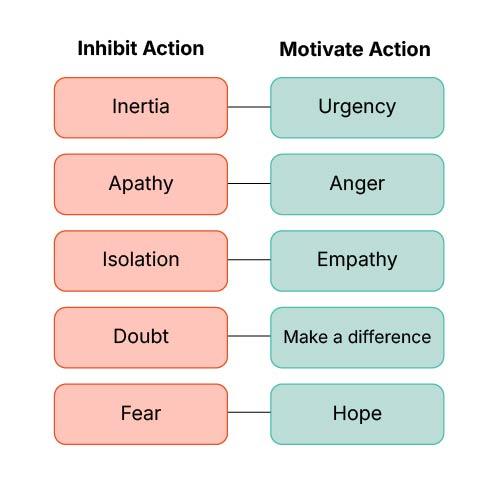
There are two broad types of emotions. Some inhibit action; such as inertia, apathy, isolation, and self-doubt. Others motivate action; including urgency, anger, empathy, a sense of agency, and hope. Our stories should centre these motivating emotions, helping people see hope over fear and neutralising emotions that prevent action.
Tell Your Story
As an organiser, you will share your story with your team, your volunteers, and the neighbours you visit. Telling your story can feel challenging. You need to choose a moment of decision in your life, one that reflects your values and answers a fundamental question for your audience:
01
Why are you part of this campaign?
Every story includes:
- characters,
- a setting,
- a challenge the character faces,
- a decision, and
- an outcome.
- Details allow your audience to step into the story with you and experience that moment of decision.
- Emotions are what ultimately move people to act.
02
Public narrative has three essential components:
- The Story of Self explains the values of the person telling the story. Each of us carries experiences that shape who we are. The more vivid and specific your story, the more connected others will feel to it.
- The Story of Us expresses the shared paths and values that move us to act collectively as a community. It defines who we are, not as categories, but as a shared identity rooted in common experiences and principles.
- The Story of Now articulates the urgent challenge our community faces and the decision we must make to confront it. It names what is wrong with the current situation and offers hope by pointing toward the future we can build together.
03
All three components are essential to a story that moves others to action.
Take a moment to reflect on your own story. Focus on the challenges you’ve faced, the decisions you made in response, and the satisfaction (or frustration) that followed.
- Why did you make those choices?
- Why not choose a different path?
- What do your decisions say about who you are, about your family, your community, or your generation?
04
You are the main character of your story.
Most of us carry stories of loss as well as stories of hope. Without hardship, there would be no reason to want change in our cities or our countries. But we also carry hope, that’s why we come together to elect our candidate and transform the way politics is done.
05
Giving and Receiving Feedback
Feedback is essential for strengthening our stories and supporting collective learning. This feedback should be grounded in questions, rather than advice. Some guiding areas for feedback include:
- The Details: What images stayed with you? Which details stood out, and how did they make you feel?
- The Challenge: What specific challenge did the narrator face? Was it described vividly? How does it connect to the campaign?
- The Decision: Was there a clear decision in response to the challenge? How did it make you feel (hopeful, angry, inspired)? What values does that decision reflect, and how do they relate to the campaign?
- The Outcome: What was the concrete result of that decision? What do we learn from it?
- The Hope: Where does hope appear in the story? How does it point toward the future? How does it connect to this campaign?
- The Urgency: Why does this story show that action is needed now? What tells us we can’t wait?
When inviting new people to join the campaign, always create space for them to share their stories. Begin meetings by explaining what motivates you to be part of the campaign. Offer new volunteers opportunities (whether in one-on-one conversations or neighbourhood meetings) to tell their own stories.
Feedback is key. And sharing is hard, requires courage and vulnerability – so, when someone finishes sharing, thank them. Together with your team, name the emotions and values you heard. Ask:
- What was the challenge?
- What was the choice?
- What was the outcome?
- Where is the hope?
This document is based on the book Groundbreakers: How Obama’s 2.2 Million Volunteers Transformed Campaigning in America by Elizabeth McKenna and Hahrie Han. Translations by Raúl Castellanos, Sofía Hurtado, and Armando Estrada.
Disclaimer: Our global content is produced from the knowledge network of many different people and geographies. Always research the rules applicable to your specific territory and ensure that your activities comply